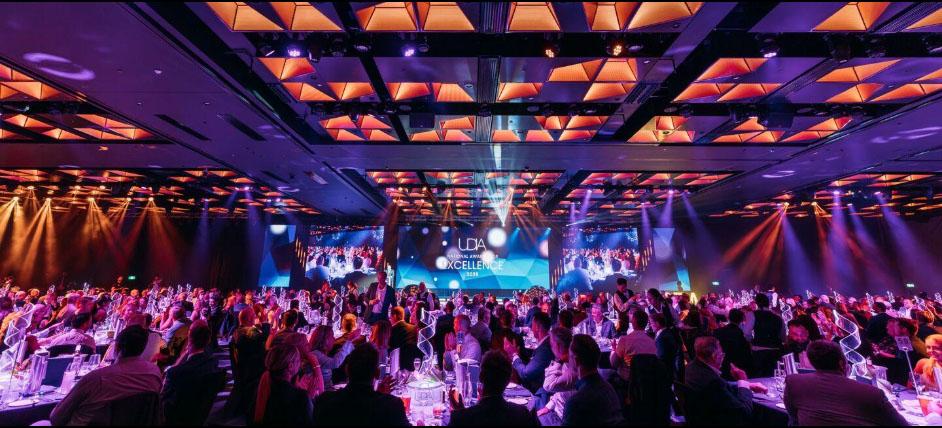
Corporate awards nights are among the most technically demanding events to execute well. They are not simply celebrations; they are structured productions with clear objectives: recognising achievement, reinforcing company values, and creating a sense of shared success — all while maintaining professionalism.
Unlike weddings or private parties, awards nights leave very little room for improvisation. Timing matters. Transitions matter. Music must support the moment without becoming the focus. When this balance is achieved, the event feels seamless, confident and well managed. When it’s not, even high‑budget awards nights can feel awkward or disjointed.
This guide breaks down how a corporate awards night run sheet should be structured, how music fits into each stage, and why experienced DJ and MC support is critical for delivering a polished result.
Why Awards Nights Require a Different Mindset
Awards nights sit at the intersection of celebration and ceremony. They often involve:
- Senior leadership or executives
- Formal recognition of individuals or teams
- A mixed audience of staff, stakeholders or clients
- Clear expectations around tone and timing
Because of this, music cannot be treated as background noise or entertainment filler. It is a production tool — used to guide energy, signal transitions, and reinforce the importance of each moment.
A professional DJ approaches an awards night not as a party, but as a live event with a structured flow.
The Purpose of a Run Sheet (and Why It Matters)
A run sheet is the backbone of any successful awards night. It defines:
- What happens
- When it happens
- Who is involved
- How transitions occur
For entertainment providers, the run sheet is essential. It allows music cues to be planned precisely, ensuring that:
- Walk‑ons feel intentional
- Applause moments are supported, not rushed
- Dead air is eliminated
- The event maintains momentum without feeling hurried
Without a run sheet, awards nights rely on guesswork — and guesswork shows.
The Core Structure of a Corporate Awards Night
While every organisation is different, most awards nights follow a similar high‑level structure. Below is a practical framework that can be adapted to suit different formats.
Phase 1: Guest Arrival & Pre‑Event Atmosphere
Purpose
Set the tone as guests arrive, network and settle into the space.
Music Role
Music during arrival should:
- Feel professional and welcoming
- Encourage conversation
- Reflect the brand or culture of the organisation
This is not the time for high‑energy tracks or dominant volume. Subtlety is key.
Practical Notes
- Volume should allow easy conversation
- Music style should be neutral and inclusive
- Avoid lyrics that distract or polarise
A well‑chosen arrival soundtrack immediately signals that the event is organised and considered.
Phase 2: Opening & Welcome
Purpose
Transition guests from informal networking into a focused event environment.
Music Role
Music here acts as a signal, not a feature. A short sting or subtle lift can:
- Draw attention to the stage
- Mark the official start of the evening
- Create a sense of occasion
Timing Considerations
The transition into the welcome should be clean and decisive. Lingering background music or awkward silence undermines authority.
This is where coordination between DJ and MC becomes critical.
Phase 3: Formal Dinner or Main Program Lead‑In
Purpose
Maintain engagement while preparing guests for the awards segment.
Music Role
Music should support the environment without competing with:
- Dinner service
- Table conversation
- On‑stage movement or logistics
At this stage, the role of music is containment — keeping energy steady without pushing it upward too early.
Phase 4: Awards Presentation (The Core of the Night)
This is the most structured and sensitive part of the run sheet.
Music Cue Types Used During Awards
1. Category Introduction Stings
Short musical cues can:
- Signal a new category
- Reset attention
- Add gravitas to the moment
These should be brief and controlled.
2. Nominee Underscore (Optional)
In some formats, a soft underscore may be used while nominees are read. This must be subtle and carefully timed.
3. Winner Walk‑Up Music
This is one of the most important cues of the night.
Good walk‑up music:
- Starts immediately after the winner is announced
- Is upbeat but professional
- Ends cleanly as the winner reaches the stage
Poorly timed walk‑up music is one of the most noticeable errors at awards nights.
4. Applause Support
Music should never overpower applause. Instead, it should:
- Lift energy briefly
- Fade quickly
- Hand control back to the MC or presenter
Phase 5: Speeches & Recognition Moments
Purpose
Allow winners and leaders to speak clearly and comfortably.
Music Role
In most cases, silence is the correct choice here. Background music during speeches can:
- Distract from the message
- Interfere with clarity
- Feel inappropriate in a recognition setting
However, music may be used:
- Before a speech (walk‑on)
- After a speech (exit cue)
Timing and restraint matter more than creativity.
Phase 6: Program Close & Energy Shift
Once awards are complete, the event’s purpose shifts.
Purpose
Transition from formal recognition to social celebration.
Music Role
This is where energy can begin to lift — but not abruptly.
Effective transitions:
- Increase tempo gradually
- Use familiar tracks to draw people out of seats
- Respect guests who may still be networking rather than dancing
The goal is to open the event up, not force a dancefloor instantly.
Phase 7: Post‑Awards Celebration
Depending on the organisation, this phase may involve:
- Light dancing
- Socialising with music
- A full dancefloor (less common, but possible)
Music selection here depends heavily on:
- Company culture
- Guest demographics
- Venue expectations
A professional DJ reads the room continuously and adjusts accordingly.
Why DJ + MC Coordination Is Critical
Awards nights require tight coordination. When DJ and MC operate independently, timing issues arise:
- Music starts too early or too late
- Speakers are cut off awkwardly
- Momentum is lost between segments
When DJ and MC work as a unit, the event feels cohesive.
At Impression DJs, many corporate clients engage DJs who are also experienced MCs, or who work closely with appointed presenters, ensuring that cues and announcements align smoothly.
👉 Learn more about corporate DJ & MC services: https://impressiondjs.com.au/corporate/
Common Awards Night Mistakes (and How to Avoid Them)
No Clear Run Sheet
Without a detailed run sheet, entertainment becomes reactive rather than proactive.
Overusing Music
Too much music during formal segments dilutes impact.
Poor Cue Timing
Late or early cues undermine confidence and flow.
Treating the Event Like a Party Too Soon
Awards nights earn celebration — it shouldn’t be forced before recognition is complete.
A Practical Corporate Awards Night Run Sheet (Example)
Arrival & Networking
– Background music (low volume)
Welcome & Opening
– Short opening sting
– MC welcome
Dinner / Lead‑In
– Background music
Awards Segment
– Category sting
– Winner walk‑up music
– Applause support
– Speech silence
Program Close
– Transition music
Post‑Awards Socialising
– Uplifted background or dance‑friendly music
This structure can be expanded or simplified depending on event size.
Why Experience Makes the Difference
Corporate awards nights demand calm execution under pressure. Schedules shift. Presenters change. Winners take longer than expected. A professional DJ anticipates this and adapts without drawing attention to the change.
That adaptability is not visible when things go well — but it’s immediately noticeable when it’s missing.
Final Thoughts: Awards Nights Are About Confidence
The best awards nights feel confident. Guests know what’s happening. Winners feel recognised. Leaders feel supported. And the event flows without awkward pauses or rushed moments.
Music, when planned properly, underpins all of this.
At Impression DJs, we approach awards nights as structured productions — not parties — ensuring music, timing and transitions work together to support your objectives.
👉 Explore our corporate entertainment services here: https://impressiondjs.com.au/corporate/